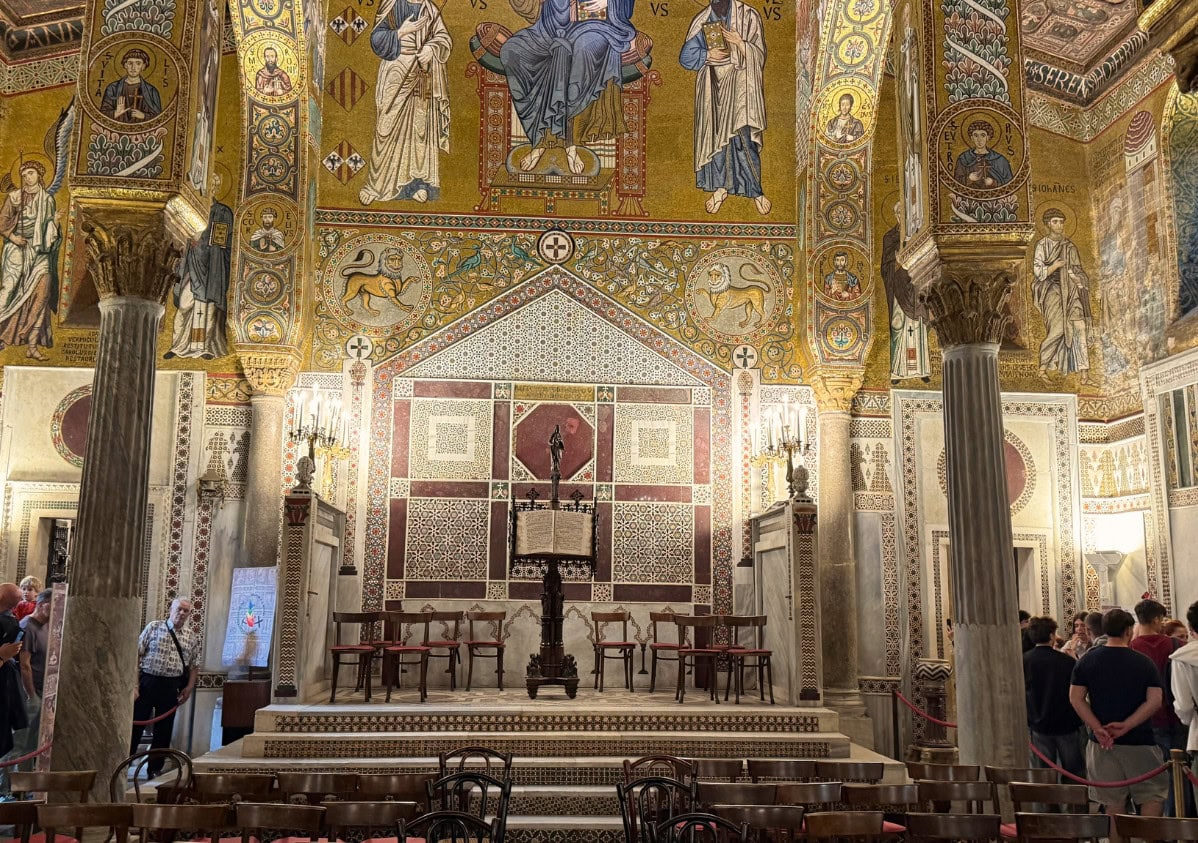

There is one thing I always do when I’m in Palermo: look up. Well, let me be a little more clear. I head straight to the Cappella Palatina in the Palazzo dei Normanni to stand in roughly fifteen centuries of Sicily. Some sites you visit. This is the kind of site you excavate with your eyes.
Palermo has been everybody’s prize: Phoenicians, Romans, Vandals, Byzantines, Arabs, Normans, Swabians, Aragonese, Bourbons. Most cities bury their conquerors in layers. This chapel builds them up the walls.
Here’s how I read it from the doorway. The bones are Roman: columns of granite and cipollino marble, and slabs of porphyry, the emperors’ purple stone, salvaged from ancient buildings. Spolia, we call it. Nobody had quarried porphyry since antiquity, so every piece in here is Roman, recycled. The plan is Latin, a cross. The walls are Greek, gold Byzantine mosaics end to end. The roof is Arab, built by artisans from the Islamic world. Four civilizations in one building, holding each other up. Roger II, the first Norman king of Sicily, consecrated it in 1140; even his water clock outside spoke Latin, Greek and Arabic
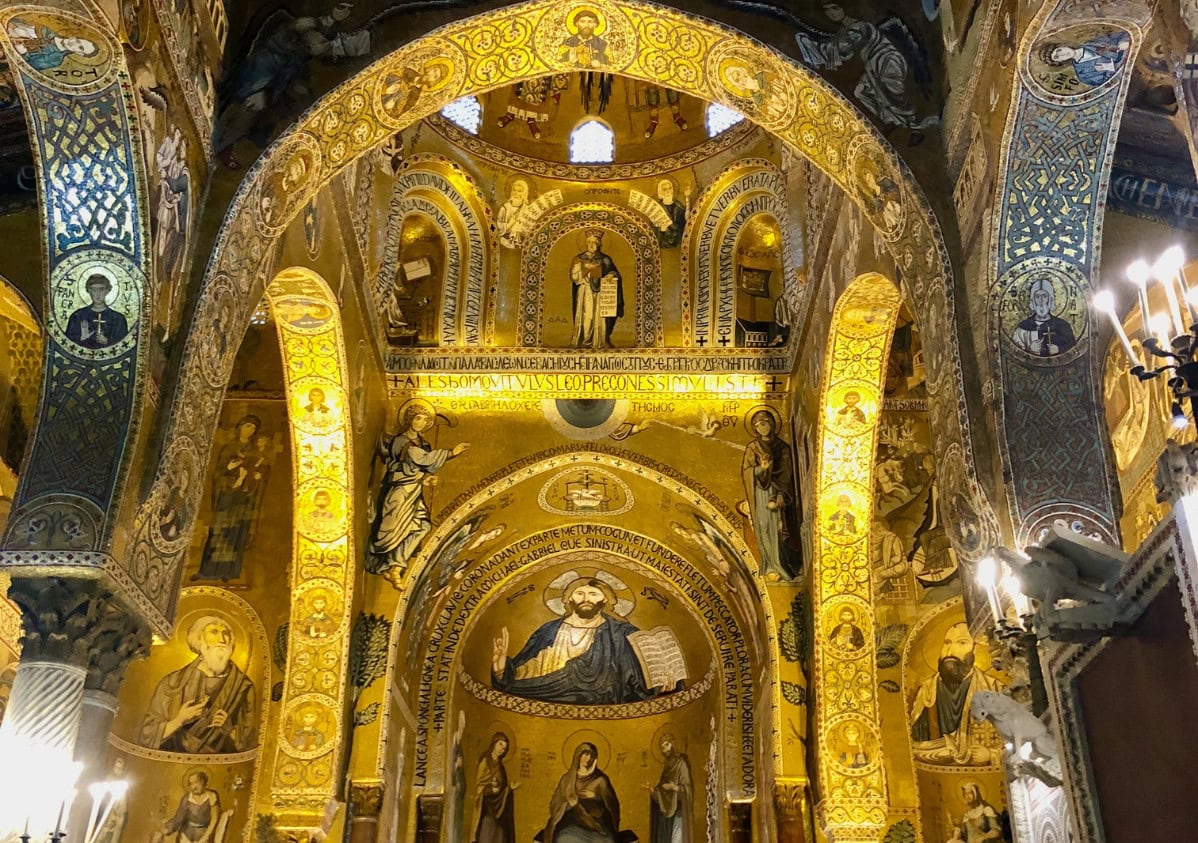
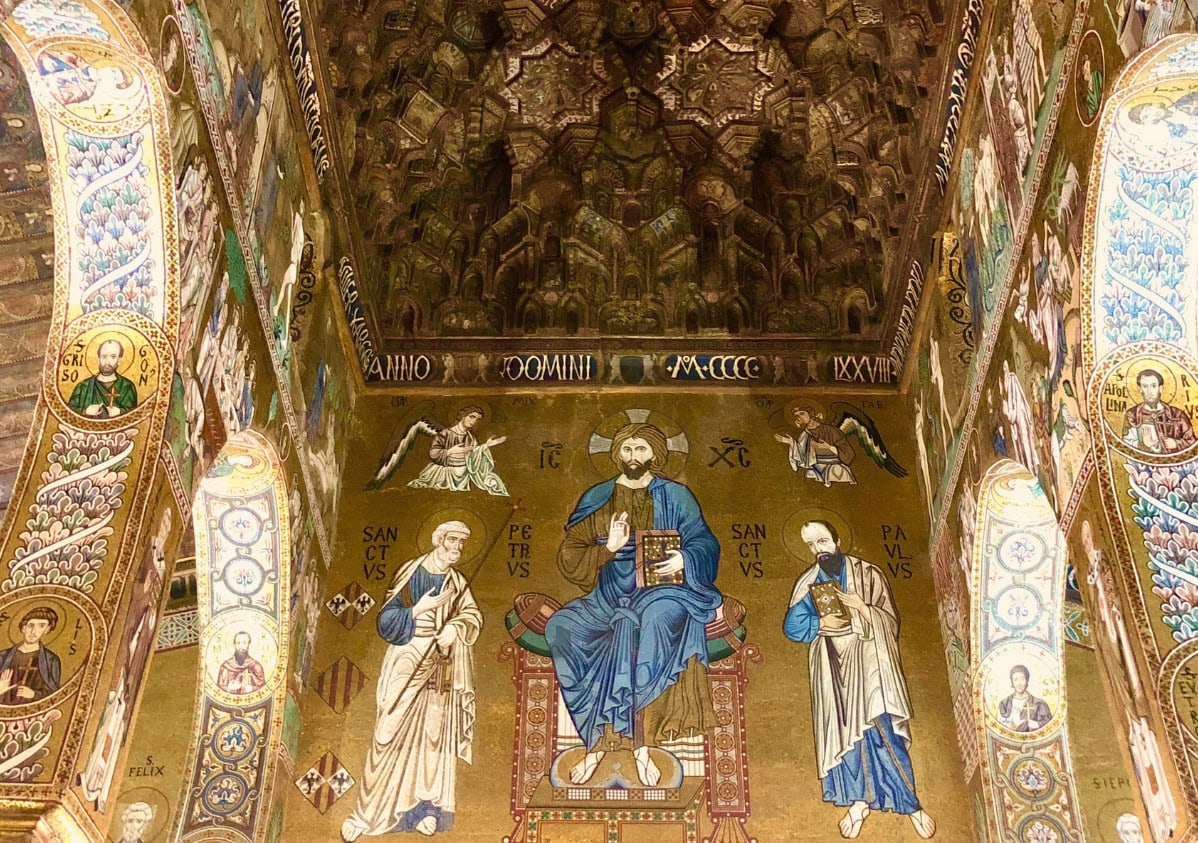
Now read the walls like a storyboard. The creation of the world. Noah and the Flood. The life of Jesus. The lives of Peter and Paul. If that line-up sounds familiar, it should. Michelangelo painted the Creation and Noah on the Sistine ceiling, the walls below carry the life of Christ, and Raphael designed tapestries of Peter and Paul to hang beneath them. I think of this chapel as the Sistine’s template, more than three centuries early and lit in gold.
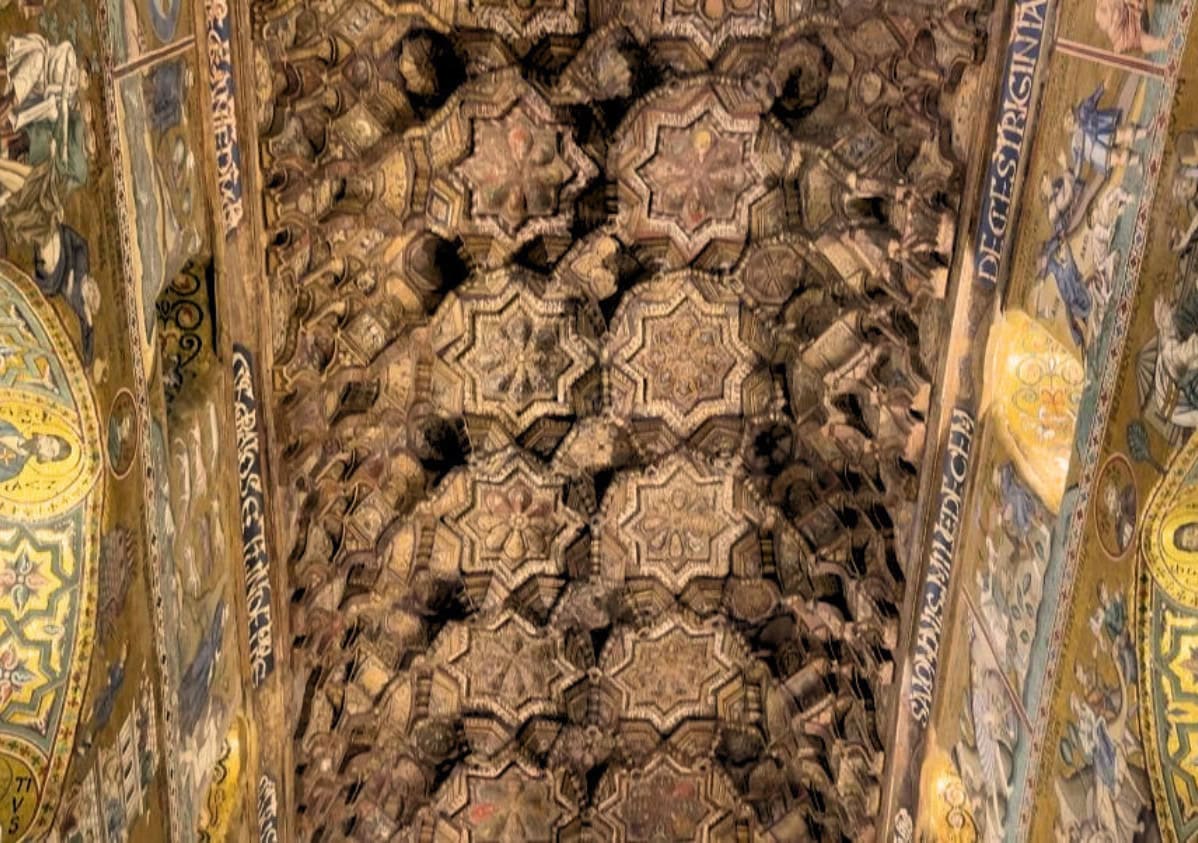
Then look up. Overhead is a honeycomb of carved and painted wood, the earliest wooden muqarnas ceiling to survive anywhere, most likely made by craftsmen trained in the Fatimid tradition. Scholars have counted more than 3,300 painted motifs in its niches: banqueters raising cups, musicians, dancers, hunters, crowned rulers, elephants, gazelles and beasts that never existed. Arabic inscriptions call down blessings on the king, some hidden so deep in the honeycomb they are nearly impossible to read. All this in a Christian king’s chapel. Bring binoculars. I’m serious.
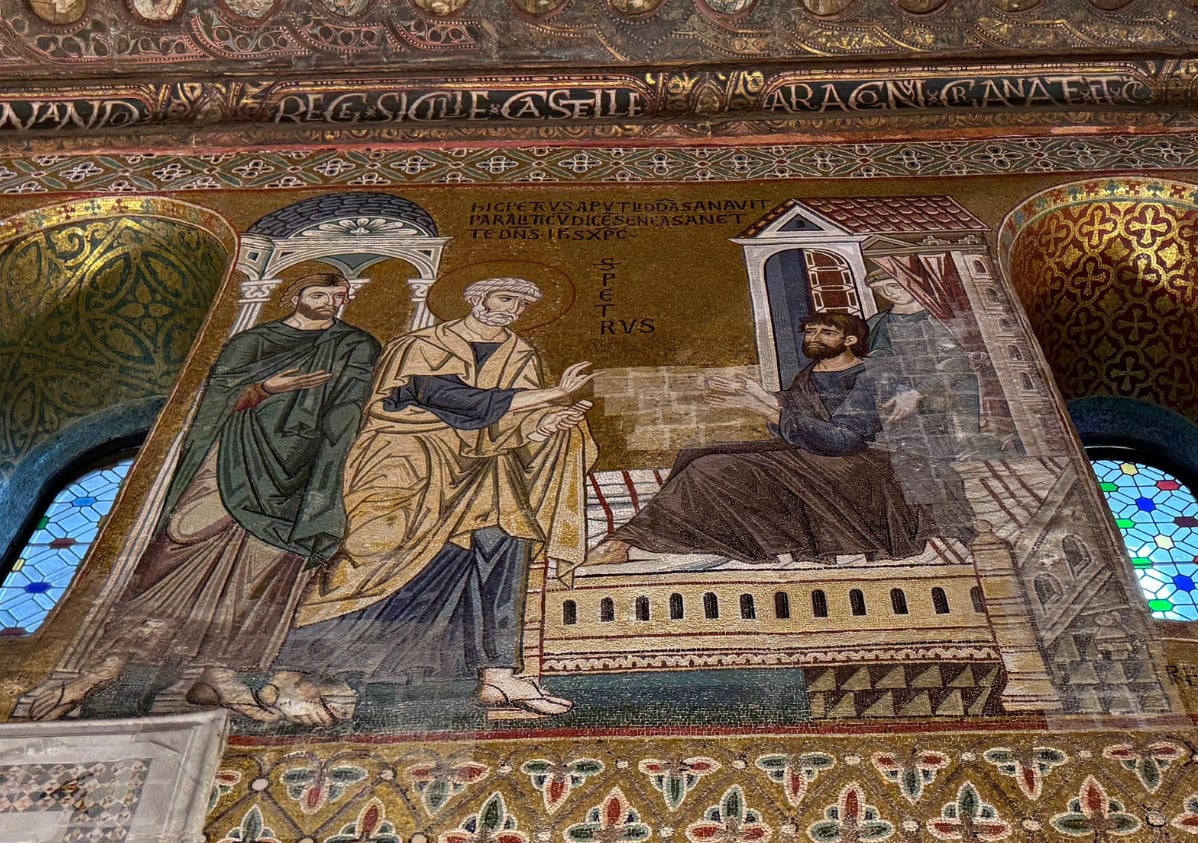
The later layers are sneakier. In the 1460s, the sculptor Domenico Gagini restored mosaics here and slipped a tiny ribbed dome, a clear nod to Brunelleschi’s in Florence, into the scene of the Raising of Tabitha. Centuries later, the Bourbons added exterior mosaics of David and Absalom that are really political allegory about the French revolutionary armies. And beneath it all lies an older church, from 1117.
Like I always say, there is always another layer.